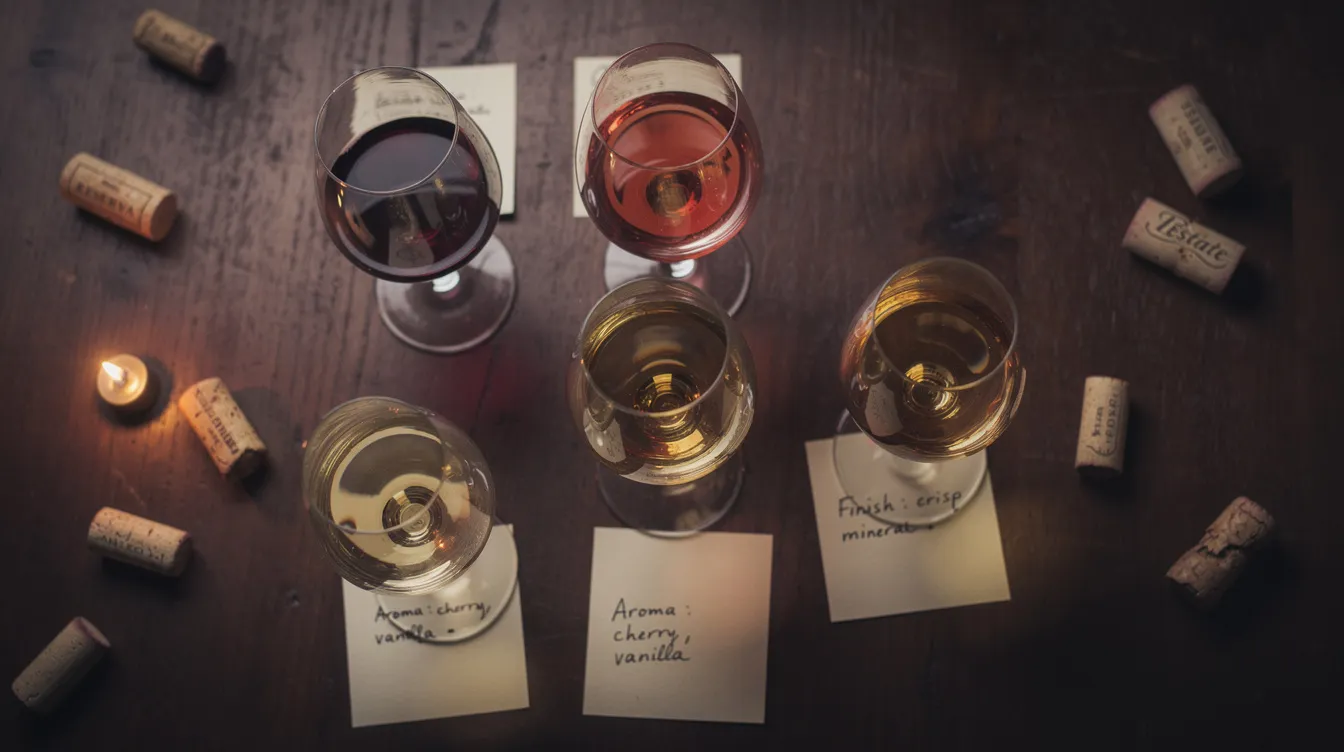
Why Host a Wine Tasting at Home?
A professional tasting room is wonderful, but there is something uniquely relaxed and personal about gathering a few friends around your own table, opening some interesting bottles, and talking honestly about what you taste. You set the pace, you choose the theme, and nobody feels rushed or intimidated. Best of all, it does not need to be expensive or complicated. With a little planning, even a first-timer can host a tasting that feels thoughtful and memorable.
Step 1: Choose a Theme
A theme transforms a random collection of bottles into a cohesive story. It also makes shopping much simpler. Here are a few beginner-friendly ideas:
- Same grape, different regions: Try three Sauvignon Blancs — one from the Loire Valley, one from New Zealand, and one from California. The differences will surprise you.
- Same region, different grapes: Explore Burgundy with a Chardonnay and a Pinot Noir side by side.
- Old World vs. New World: Pair a Spanish Tempranillo against an Argentine Malbec to feel how winemaking philosophy shapes style.
- Under a budget: Challenge guests to bring a bottle under £15 or $20. It is a great way to discover hidden gems.
- Blind tasting: Wrap bottles in foil or paper bags. Guests guess the grape or country — always a lively talking point.
Aim for four to six wines for an evening tasting. More than six and palate fatigue sets in quickly, especially for less experienced tasters.
Step 2: Gather the Right Equipment
You do not need a professional setup. A few basics make a real difference:
- Glassware: One clean, clear, uncoloured glass per person per wine is ideal. A large, tulip-shaped all-purpose glass works for both reds and whites. Rinse glasses with plain water between wines if you are reusing them.
- A corkscrew and foil cutter: Keep a reliable one handy. Nothing kills the mood like a broken cork.
- Ice bucket or wine cooler: White wines and sparkling wines should be served chilled, around 8–12 °C (46–54 °F). Reds are best slightly below room temperature, around 16–18 °C (61–64 °F).
- Tasting notes sheets: Print or write simple cards with columns for appearance, aroma, taste, and finish. Guests love having something to scribble on — and it helps them pay attention.
- Spittoons or dump buckets: If you are tasting six wines, spitting or pouring out remainders is genuinely sensible. It keeps everyone sharp and promotes responsible enjoyment.
- Still water and plain bread or crackers: Neutral palate cleansers between wines are essential.
Step 3: Plan the Pouring Order
Order matters. Starting with a big, tannic red and then moving to a delicate white will overwhelm the palate and make lighter wines seem thin. Follow these general rules:
- Sparkling before still
- Dry before sweet
- White before red
- Light-bodied before full-bodied
- Lower alcohol before higher alcohol
Pour modest amounts — roughly 60–75 ml (about 2–2.5 oz) per wine. This keeps portions sensible, reduces waste, and makes it easy for guests to revisit a favourite at the end.
Step 4: Guide Your Guests Through the Tasting
You do not need to lecture, but a gentle structure helps everyone get more from the experience. For each wine, encourage guests to work through four steps — the same approach covered in detail in our guide on how to taste wine:
- Look: Tilt the glass against a white background. Note the colour and clarity. Deeper colour in a red often signals more body or age.
- Swirl: Swirling releases aromatic compounds. Do not be self-conscious about it.
- Smell: Take one gentle sniff, then a deeper one. What fruit, floral, earthy, or spice notes stand out? There are no wrong answers.
- Taste: Take a small sip and let it coat your palate. Notice acidity, tannin, sweetness, body, and the length of the finish.
Encourage guests to write down their impressions before sharing them aloud. This prevents the first speaker from anchoring everyone else's perception — a real phenomenon in group tastings.
Step 5: Pair Food Thoughtfully
Food is not just a backdrop — it actively changes how a wine tastes. Salty snacks can soften the perception of tannin. A squeeze of lemon on food can make an unoaked white feel more refreshing. A few simple pairing ideas for a tasting spread:
- Neutral crackers and plain bread for palate cleansing between pours
- Mild cheeses (Comté, mild Cheddar, Brie) that work across a range of styles
- Charcuterie — cured meats are particularly flattering alongside medium-bodied reds
- Olives and nuts for fuller whites and lighter reds
- Dark chocolate as a final pairing if you include a sweet or fortified wine
Avoid very spicy or heavily dressed food during the formal tasting — strong flavours can mask the wine's character entirely.
Step 6: Identify Your Wines Easily
One of the most common questions at any home tasting is: "Wait — what exactly is in this bottle?" Before guests arrive, you can use the Vino AI wine scanner to snap each label and instantly pull up grape varieties, region, tasting notes, ideal serving temperature, and a suggested drink window — all of which make excellent conversation starters to share with the group.
Step 7: Keep It Relaxed and Responsible
The best home tastings feel like a conversation, not a test. Remind guests that there is no right or wrong answer to what they smell or taste — human perception varies enormously, and that variation is part of what makes tasting together so interesting.
Because you are pouring multiple wines, it is worth thinking ahead about how guests will get home safely. Keep water flowing throughout the evening, pace the pours generously over time, and always have a non-alcoholic option available. A tasting is meant to deepen appreciation, not to see how much anyone can consume.
A Simple Evening to Remember
Hosting a wine tasting at home comes down to a clear theme, a sensible pour order, a few good glasses, and an atmosphere where curiosity is more important than expertise. Whether your guests know their Burgundy from their Bordeaux or are picking up a wine glass for the very first time, the point is to taste deliberately, talk openly, and enjoy the journey together.
Discover any wine with Vino AI
Snap a photo of any wine label for instant AI identification, tasting notes, and food pairings — free.


Published by Vino AI. Enjoy wine responsibly.