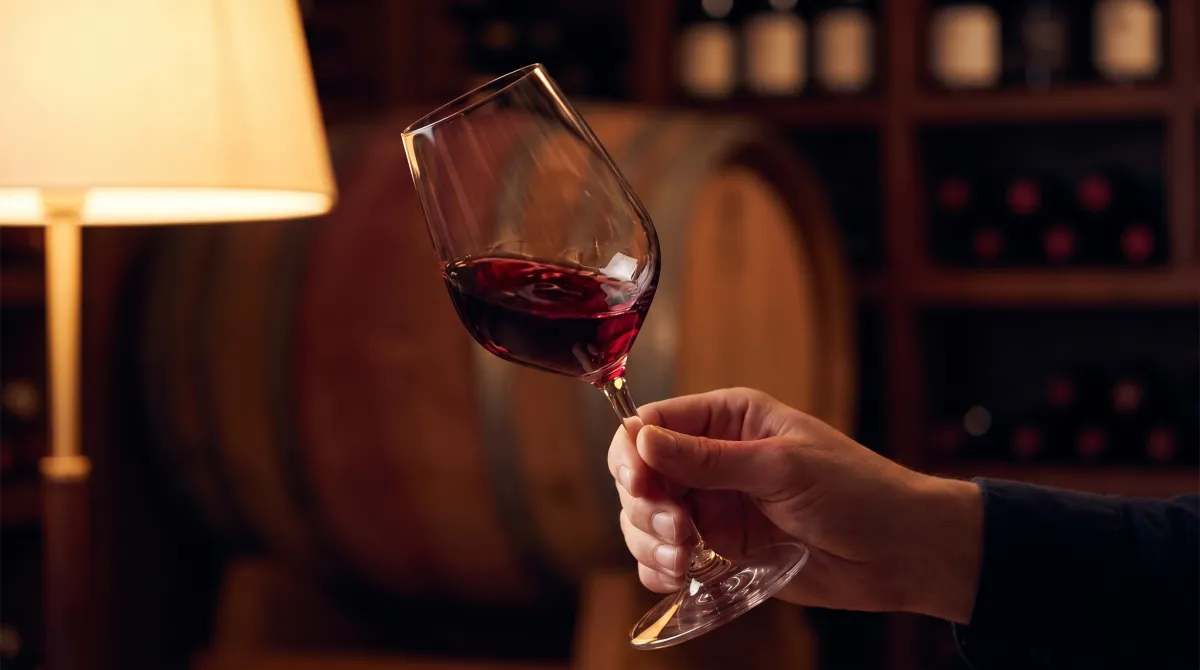
Watching a sommelier swirl, sniff, and pause before a verdict can look like theater. It isn't. Each step is doing a specific job, and you can learn the whole routine in one evening. Here's the simple method — look, smell, sip — that turns drinking wine into actually tasting it.
1. Look
Tilt the glass against a white background and look at the wine's color and how deep it is. Color hints at age and style: young reds are bright purple-ruby and fade toward brick and garnet as they age; whites deepen from pale lemon to gold over time. You don't need a verdict here — you're just waking up your senses and setting expectations.
2. Swirl
Give the glass a gentle swirl on the table. This coats the inside with wine and releases its aromas into the air above — that's the entire point. The "legs" or "tears" that run down the glass mostly indicate alcohol and sugar, not quality, so don't read too much into them.
3. Smell
Most of what we call "taste" is actually smell. Put your nose in the glass and take a couple of short sniffs. Don't worry about naming a dozen fruits like an expert — start broad and work inward:
- Fruit: citrus, apple, berries, dark plum?
- Other notes: flowers, herbs, spice, vanilla, oak, earth?
- Overall: does it smell fresh and bright, or rich and developed?
There are no wrong answers. Your associations are valid — the goal is paying attention, not passing a test.
4. Sip
Take a small sip and let it move across your whole mouth. Now you're assessing structure:
- Sweetness — bone dry to lusciously sweet (felt at the tip of the tongue).
- Acidity — that mouth-watering tartness; high acid makes a wine feel fresh and lively.
- Tannin — the grippy, drying sensation in reds, like strong tea. Smooth or astringent?
- Body — does it feel light like skim milk or full like cream?
- Finish — how long the flavor lingers after you swallow. A long finish is usually a sign of quality.
5. Conclude
Finally, step back: did you like it, and why? Naming what you enjoyed — "I love the bright acidity" or "the tannins were too grippy for me" — is how you learn your own palate and choose better bottles next time.
Build your palate faster
The quickest way to improve is to taste attentively and compare notes against a reference. Vino AI's AI sommelier gives you detailed tasting profiles for any bottle, so you can check your impressions against expert notes and sharpen your senses over time. Not sure what you're pouring? Learn how to read a wine label first, then put it to the test.
Discover any wine with Vino AI
Snap a photo of any wine label for instant AI identification, tasting notes, and food pairings — free.


Published by Vino AI. Enjoy wine responsibly.