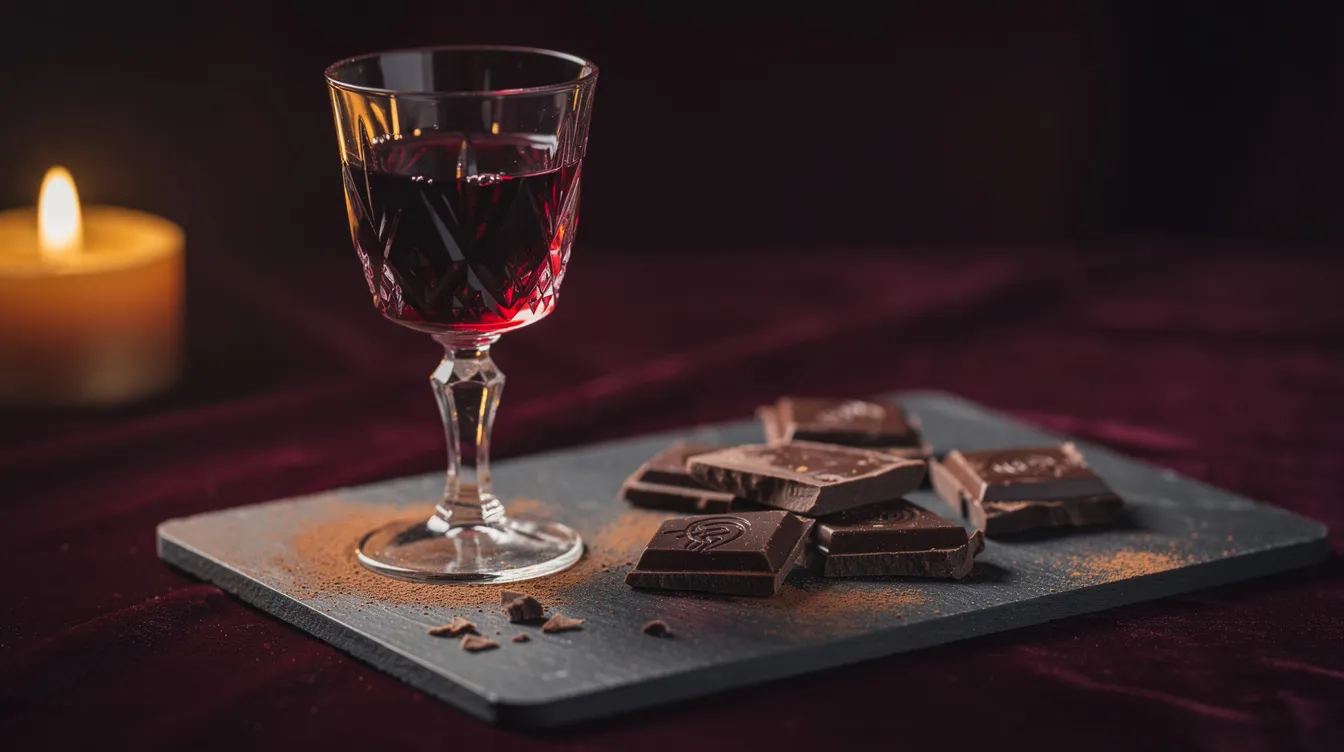
Why Wine and Chocolate Can Be Tricky
Few combinations sound as romantic as wine and chocolate. Yet anyone who has taken a sip of dry red wine immediately after a piece of milk chocolate knows that things can go wrong fast — the wine turns bitter, the fruit disappears, and both the wine and the chocolate taste worse than they did on their own.
The golden rule of pairing wine with chocolate is simple: the wine should be at least as sweet as — and ideally sweeter than — the chocolate. When a drier wine meets sweet chocolate, the tannins in the wine amplify and the fruit notes get stripped away. Get the sweetness balance right, however, and the pairing opens up into something genuinely special.
The other key factor is intensity. Bold, bitter dark chocolate needs a wine with enough body and flavor to stand up to it. Delicate white chocolate, on the other hand, pairs best with lighter, more aromatic styles. Match intensity with intensity and you are already most of the way there.
Dark Chocolate: Bold Meets Bold
Dark chocolate — anything from about 60% cacao upward — is the easiest type to pair with wine because its bitterness and complexity can handle a wine with real structure and character.
Port
A ruby or tawny Port is the classic choice, and for good reason. Ruby Port brings rich black-fruit flavors — blackberry, plum, cherry — that mirror the dark-fruit notes in high-quality dark chocolate. Tawny Port adds layers of dried fig, walnut, and caramel that pair beautifully with chocolate that has nutty or roasted notes. The natural sweetness of Port ensures the wine stays ahead of even intensely bitter chocolate.
Banyuls and Maury
These French vins doux naturels from the Roussillon region are made from Grenache and are among the world's finest chocolate-pairing wines. They offer red-fruit sweetness, earthy depth, and just enough acidity to keep the pairing lively. If you want to impress a chocolate lover, track one of these down.
Zinfandel and Shiraz
For those who prefer a dry red, a ripe, full-bodied Zinfandel or Australian Shiraz can work with dark chocolate that sits in the 60–70% range, especially if the chocolate has jam-like or spicy notes. The key is choosing a wine that is very ripe and fruit-forward with soft tannins rather than a leaner, more austere style.
Milk Chocolate: Sweet, Creamy, Crowd-Pleasing
Milk chocolate is sweeter and creamier than dark, which means you need a wine that can match that sweetness without being overwhelmed by it.
Brachetto d'Acqui
This lightly sparkling, sweet Italian red from Piedmont is practically made for milk chocolate. It is low in alcohol, bursting with strawberry and raspberry aromas, and has a gentle sweetness that complements the creamy sugar of milk chocolate without overpowering it. It is also just plain fun to drink.
Lambrusco (Sweet Style)
A sweet or semi-sweet Lambrusco brings fizz, red-berry fruit, and a touch of earthiness that cuts through the richness of milk chocolate. Look for bottles labeled amabile or dolce for the sweeter styles.
Cream Sherry or Pedro Ximénez
A rich Cream Sherry or a Pedro Ximénez (PX) Sherry — the latter being almost impossibly thick and raisiny — works wonderfully with milk chocolate truffles or chocolate-caramel combinations. PX in particular is like liquid chocolate itself, so the pairing practically makes itself.
White Chocolate: Delicate and Sweet
White chocolate contains no cocoa solids, only cocoa butter, sugar, and milk. It is intensely sweet and very rich, with vanilla and creamy notes. This calls for wines that are aromatic, sweet but not too heavy, and ideally with a touch of acidity to provide contrast.
Moscato d'Asti
Light, gently fizzy, and fragrant with peach, apricot, and orange blossom, Moscato d'Asti is a natural partner for white chocolate. Its low alcohol and fresh acidity stop the pairing from feeling cloying.
Late-Harvest Riesling
A late-harvest or Auslese Riesling brings honeyed sweetness alongside bright acidity, which lifts the richness of white chocolate beautifully. If you would like to learn more about Riesling's incredible range, take a look at our Riesling guide for a full breakdown of styles and regions.
Demi-Sec Champagne or Sparkling Wine
The bubbles in a demi-sec (medium-sweet) sparkling wine cut through the fat of white chocolate, and the biscuity, creamy notes in Champagne echo the vanilla flavors in the chocolate itself.
Chocolate Desserts: Beyond the Bar
When chocolate appears in a dessert — a flourless chocolate cake, a chocolate mousse, or a warm brownie — the pairing dynamics shift slightly because other ingredients come into play.
- Chocolate lava cake: Ruby Port or a rich Banyuls. The warm, molten center needs a wine with real sweetness and body.
- Chocolate mousse: Brachetto d'Acqui or a demi-sec sparkling rosé. The lightness of mousse suits a lighter wine.
- Chocolate and raspberry tart: A fruity, sweet Lambrusco or a rosé Port echoes the berry notes in the fruit.
- Salted caramel chocolate: Tawny Port or a nutty Amontillado Sherry, where the savory-sweet tension plays off the salt beautifully.
Common Mistakes to Avoid
- Pairing dry red wine with sweet milk or white chocolate. This is the most common error and the one most likely to ruin both the wine and the treat.
- Ignoring serving temperature. Dessert wines served too warm can taste flabby and heavy. Aim for around 10–14°C (50–57°F) for most sweet reds and Ports. You can check ideal temperatures for your specific bottle using our serving temperature guide.
- Choosing a wine that is less sweet than the chocolate. Always let the wine lead on sweetness.
- Overlooking sparkling wines. Bubbles are a secret weapon with chocolate because the effervescence cleanses the palate between bites.
Let Technology Help You Pair
If you are ever at a dinner party, a wine shop, or simply staring at an interesting bottle and wondering whether it will work with the chocolate you have at home, the Vino AI food pairing feature lets you scan a dish or describe what you are eating and instantly get tailored wine recommendations — no guesswork required. It is a genuinely useful shortcut when you want to get the pairing right without memorizing every rule.
The Simple Summary
Wine and chocolate pairing does not have to be complicated. Keep the wine at least as sweet as the chocolate, match the intensity of both, and lean toward Port, Banyuls, Moscato, or Brachetto d'Acqui as your reliable starting points. Once you have the basics down, experimenting with different combinations becomes one of the real pleasures of the wine world. Pour a small glass, break off a square of good chocolate, and enjoy the process of finding your own favorite match.
Discover any wine with Vino AI
Snap a photo of any wine label for instant AI identification, tasting notes, and food pairings — free.


Published by Vino AI. Enjoy wine responsibly.